Transfer Latency
Understanding the difference between EFT, Wire, and Bill Payment processing times in Canada. Most delays are caused by settlement cycles (T+2) or bank-level verification holds that can last up to 5 business days for new accounts.
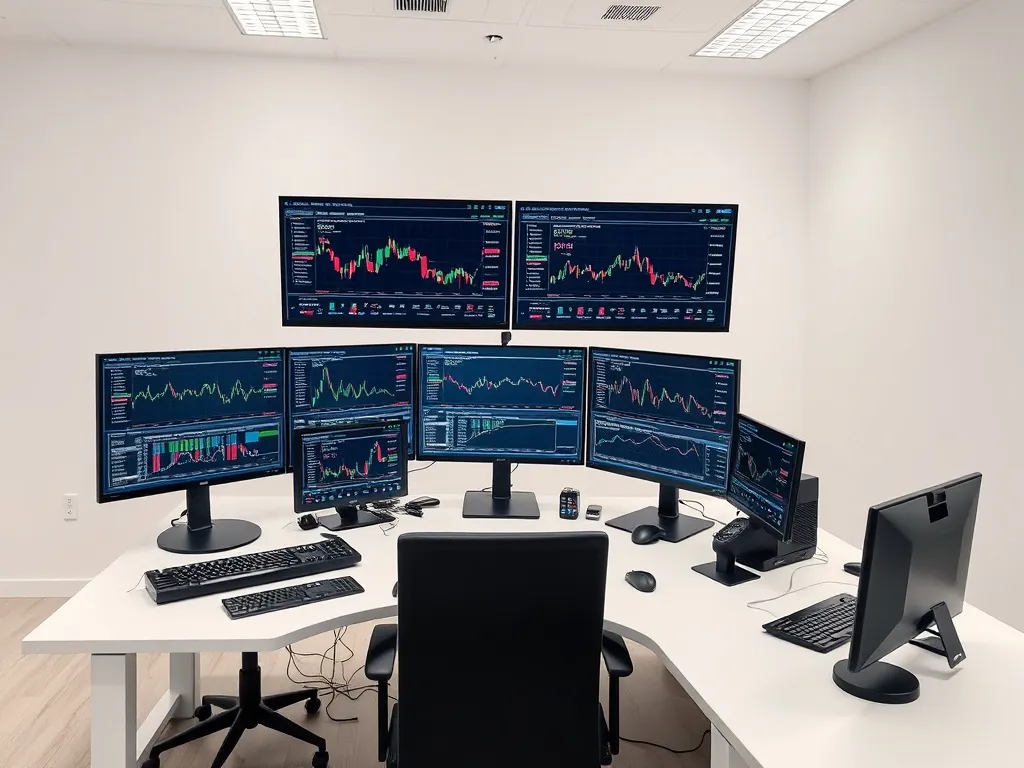
Navigating the technical landscape of Canadian brokerage platforms requires a clear understanding of fund transfer protocols, tax reporting integration, and software optimization. This guide addresses the mechanical friction points often encountered when managing a self-directed ETF portfolio. We provide diagnostic steps for common errors and structural frameworks for maintaining your digital investment infrastructure.
Understanding the difference between EFT, Wire, and Bill Payment processing times in Canada. Most delays are caused by settlement cycles (T+2) or bank-level verification holds that can last up to 5 business days for new accounts.
Resolving discrepancies in T3 and T5 slips. Learn how to cross-reference your brokerage statements with the CRA requirements to ensure your ACB (Adjusted Cost Base) calculations remain accurate for non-registered accounts.
Troubleshooting API connections between brokerages and portfolio trackers like Passiv or Wealthica. We analyze the common factors behind failed data refreshes and multi-factor authentication (MFA) lockout scenarios.
One of the most frequent technical hurdles for Canadian investors is the "Electronic Funds Transfer" (EFT) lag. When you initiate a deposit from a Big Five bank to a discount brokerage, the funds may appear in your total equity but remain "unsettled" for trading. This is a security protocol designed to mitigate the risk of NSF (Non-Sufficient Funds). Typically, the settlement period for Canadian equities and ETFs follows a T+1 or T+2 cycle, but the initial cash clearing can take 3 to 5 business days.
If your transfer has exceeded the 5-day window, the primary cause is often a mismatched name on the account. Canadian KYC (Know Your Customer) regulations require that the name on the originating bank account exactly matches the name on the brokerage account. Even a minor discrepancy, such as a missing middle initial, can trigger a manual review or a rejection of the funds. In such cases, the capital is returned to the source bank, which can take an additional 3-7 days to process.
"Operational efficiency in investing is not just about choosing the right fund; it is about ensuring the plumbing of your financial system—the transfers, the settlements, and the reporting—functions without friction."
Another critical factor is the "Bill Payment" method versus the "Linked Account" method. Using the bill payment feature of your online banking is often the fastest way to move smaller amounts (under $10,000), as it leverages the Interac or internal bank networks which clear faster than traditional AFT pulls. For larger institutional transfers or full account migrations (ATON transfers), the timeline extends to 10-20 business days as legal titles of securities must be verified and moved between custodians.
Tax season presents a specific set of technical challenges for ETF investors. Unlike mutual funds, where the provider often handles all internal accounting, ETF investors in non-registered accounts (Taxable accounts) are responsible for tracking their Adjusted Cost Base (ACB). Failure to account for "Phantom Distributions"—reinvested capital gains that increase your cost base without a cash payout—leads to double taxation when you eventually sell your position.

Optimizing your workflow requires the right toolset. We have evaluated the most stable platforms for Canadian investors based on their API reliability and data accuracy.
| Tool Name | Primary Function | Technical Reliability | Best For |
|---|---|---|---|
| Passiv | Portfolio Rebalancing & API Execution | High (Direct Questrade/Wealthsimple API) | One-click rebalancing |
| Wealthica | Net Worth Tracking & Aggregation | Moderate (Occasional MFA sync issues) | Viewing all accounts in one place |
| AdjustedCostBase.ca | Tax Calculation (ACB) | High (Manual Data Entry/Upload) | Non-registered account tax prep |
| TradingView | Technical Charting & Analysis | High (Web-based) | Market timing and entry points |
The standard Canadian protocol for transferring investment accounts between brokerages electronically, typically taking 10 days.
A technical setting where the brokerage automatically uses cash dividends to buy more shares of the same ETF, often without commission.
A market order executes immediately at the current price; a limit order only executes at a specific price or better, protecting against volatility.
A CRA rule preventing you from claiming a capital loss if you buy the same security 30 days before or after the sale.
Technical mastery is the foundation of long-term wealth. Explore our full guide on market mechanics to understand how to execute trades like a professional.
Go to Market Mechanics