Precision Entry
Understanding the difference between immediate execution and price-controlled entry is vital for maintaining portfolio integrity during volatile periods.
Selection CriteriaTechnical optimization of trade execution for index investors. Minimize slippage, control currency conversion costs, and synchronize with North American exchange schedules to maximize net returns.
Understanding the difference between immediate execution and price-controlled entry is vital for maintaining portfolio integrity during volatile periods.
Selection CriteriaCalculate bid-ask spreads to identify the hidden costs of trading low-volume index funds and optimize your entry points accordingly.
Income StrategiesUtilize advanced techniques like Norbert’s Gambit to bypass the standard 1.5% to 2% currency conversion fees charged by Canadian banks.
Technical SupportA market order is an instruction to buy or sell an ETF immediately at the best available current price. While this guarantees execution, it does not guarantee price, which can be problematic during opening volatility or low liquidity periods. For long-term passive investors, market orders are often discouraged because they expose the buyer to "slippage"—the difference between the expected price and the actual execution price.
A limit order provides a technical safeguard by specifying the maximum price you are willing to pay for a buy order, or the minimum for a sell order. This ensures that you never overpay for an ETF, even if the market spikes momentarily. However, the trade-off is that a limit order may not be filled if the market price moves away from your specified limit.
In the context of Canadian index funds like VGRO or XEQT, using a limit order set at the current "Ask" price or slightly above is a recommended practice. This balances the need for execution with the protection against sudden price gaps. Technical data suggests that retail investors can lose up to 0.5% in value annually simply by using market orders on wide-spread securities.
Limit orders eliminate the risk of unexpected price surges during the milliseconds of order routing.
Market orders prioritize speed; limit orders prioritize cost-basis control.
Day orders expire at market close, while GTC (Good-Til-Canceled) orders remain active for up to 90 days.
The bid-ask spread represents the transaction cost paid to market makers. For Canadian ETFs, this spread is the difference between the highest price a buyer is willing to pay (Bid) and the lowest price a seller is willing to accept (Ask).
Spread % = [(Ask - Bid) / Ask] * 100 Example: If an ETF has a Bid of $25.00 and an Ask of $25.05, the spread is 0.20%.
For highly liquid ETFs like XIU (iShares S&P/TSX 60), the spread is typically just one cent. However, for specialized or niche international ETFs, the spread can widen to 0.5% or more. Buying during periods of low liquidity (like the first 30 minutes of the trading day) can result in paying a significantly higher spread, effectively reducing your starting capital.
Market makers facilitate liquidity by standing ready to buy and sell. The spread is their compensation for the risk of holding the security. Investors should monitor the "Depth of Book" to see how many shares are available at the current bid and ask prices before placing large orders.
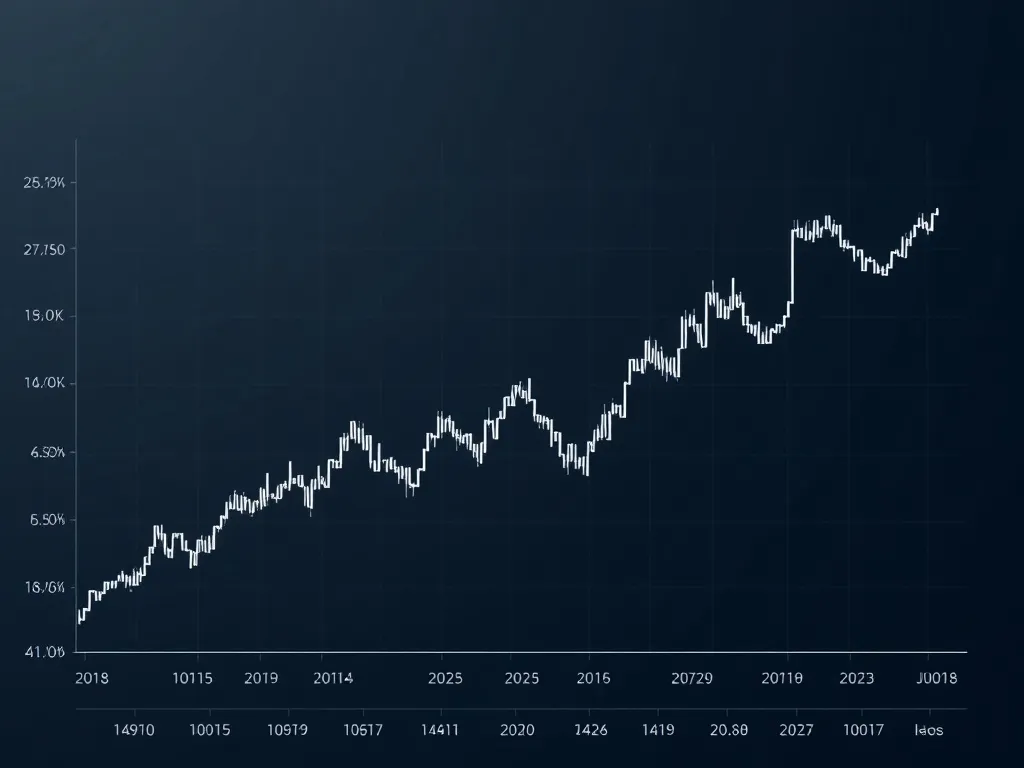
The TSX and major U.S. exchanges (NYSE, NASDAQ) operate from 9:30 AM to 4:00 PM Eastern Time. However, the quality of execution varies throughout the day. The "Open" (first 30 minutes) and "Close" (last 30 minutes) are characterized by high volatility and price discovery, which often leads to wider spreads and unpredictable price movement.
Technical analysis shows that the optimal time to execute ETF trades is between 10:30 AM and 3:30 PM ET. During this window, the underlying securities of the index have usually established stable pricing, and market makers provide the tightest spreads.
For Canadians investing in U.S.-listed ETFs (to avoid foreign withholding tax in RRSPs or to access lower MERs), currency conversion is the single largest friction point. Standard brokerage conversion rates add a hidden fee of approximately 1.5% to 2% on every transaction. On a $50,000 conversion, this equates to $1,000 in lost capital.
"Norbert's Gambit remains the most effective technical workaround for Canadian investors to exchange CAD to USD at near-spot rates, reducing friction by up to 90%."
The process involves purchasing a dual-listed security (typically DLR.TO), requesting the brokerage to "journal" the shares to the U.S. dollar version (DLR.U.TO), and then selling the U.S. version. This allows the investor to move between currencies for the cost of two trading commissions rather than a percentage-based fee.
| Method | Estimated Cost | Execution Time | Technical Complexity |
|---|---|---|---|
| Standard Brokerage FX | 1.50% - 2.00% | Instant | Low |
| Norbert's Gambit | ~0.10% (Commissions) | 2-4 Business Days | Medium |
| Interactive Brokers (IBKR) | 0.02% (Spot) | Instant | High (Platform) |
Execution is the final step in your investment workflow. Ensure you are utilizing the correct order types and timing to preserve your capital.